
THE CURRENT APPROACH
One strain in, one vaccine out, always one step behind the virus
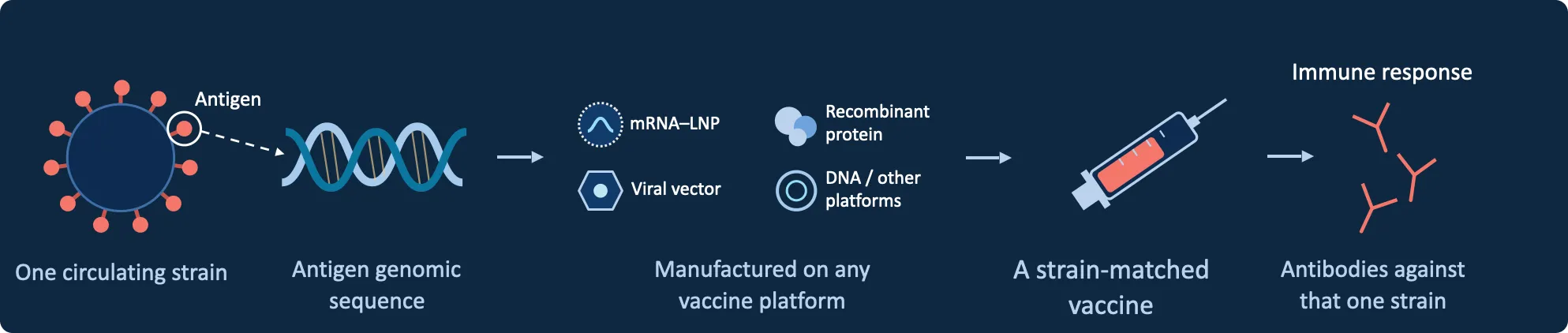
A vaccine teaches the immune system to recognise a virus before infection, using an antigen: the part of the virus the immune system learns to spot.
Current vaccines are derived from the antigen of one circulating strain and the antibodies it raises are specific only to it.
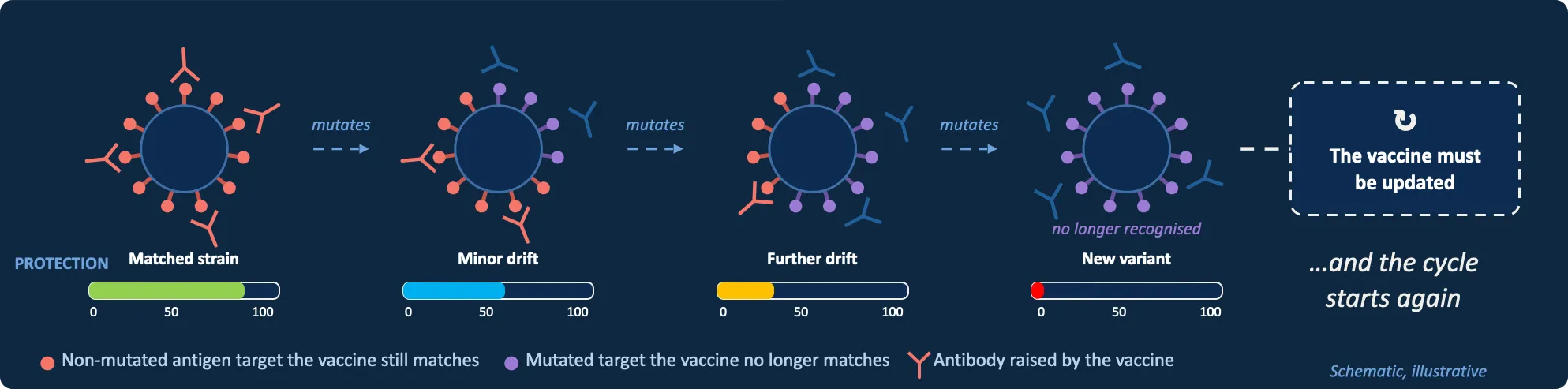
As the virus mutates, the targets that those antibodies recognise change, protection falls, and the vaccine must be updated.
1 TAKING THE SEQUENCE OF ONE CIRCULATING STRAIN
2 That protection is STRAIN-SPECIFIC, AND FADES AS THE VIRUS MUTATES
THE DIOSYNVAX APPROACH
From whole viral families to combined engineered antigens: protection designed to last
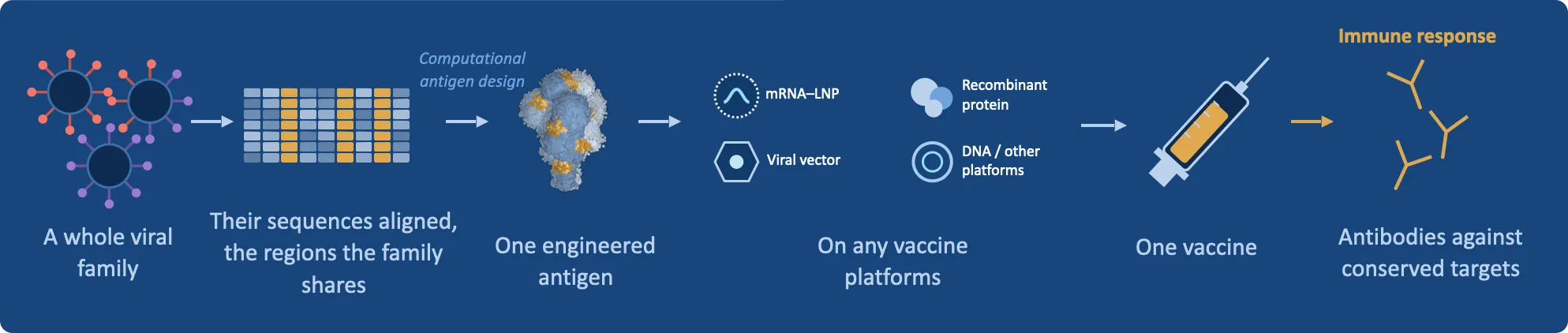
Unlike traditional vaccines, the design input is not one strain but the evolutionary history of a whole viral family; across those sequences the platform identifies the regions conserved across the family, and computationally engineers a new antigen built around them.
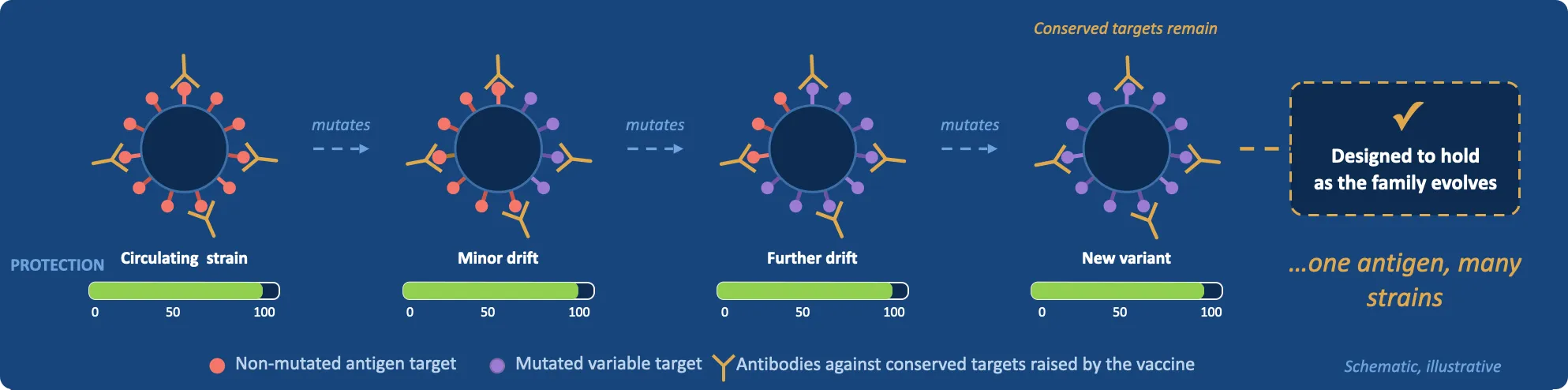
Because the antibodies are raised against conserved targets rather than being strain-specific, those targets are still there when the variable parts of the virus mutate, so protection is designed to hold across the family rather than being rebuilt for each new strain.
THE PLATFORM

Engineered Antigens
Designed, not copied: built from what a viral family has in common.

Any Delivery Platform
Works across mRNA, DNA, viral vector and protein vaccines.

Learns With Every Design
Each sequence, structure and experiment improves next designs.
LEAD CANDIDATE
DVX-Supra Seasonal: one flu vaccine, designed to last beyond one season.
Broader strain coverage and greater disease reduction than a licensed seasonal vaccine in preclinical studies.
~90% vs ~24%
Neutralisation breadth across H1N1 Influenza strain panel
PRECLINICAL – FERRET
38% vs 8%
Disease Reduction
PRECLINICAL – FERRET
OUR NETWORK
Advancing vaccine innovation together
Working alongside leading academic institutions and industry partners to accelerate the development of next-generation vaccines.